

Flexible packaging may appear stable immediately after lamination, while delamination, blistering, seal failure, ink fading or barrier loss may develop later during warehousing, transportation, shelf display or outdoor storage. Accelerated aging testing helps packaging manufacturers identify these risks earlier by exposing finished pouches or laminated films to controlled heat, humidity and light conditions.
For laminated packaging, the purpose of accelerated aging is not simply to “speed up” the real service life. It is to compare material stability, reveal potential failure modes and support product qualification, adhesive selection and process improvement before commercial production.
This article introduces a practical test framework for flexible packaging structures, including dry laminates, solvent-free laminated films, retort pouches, daily chemical pouches and vacuum food bags.
A flexible package is a multi-layer system. Its performance depends on the interaction between films, ink, adhesive, metallized or aluminum layers, sealant layers and the packaged product. A material can retain a good appearance while its peel strength or barrier performance is already declining.
The aging program should be selected according to the packaging structure, adhesive system, contents, expected storage environment and customer specification. Typical structures may include BOPP/CPP, BOPP/VMPET/PE, PET/VMPET/PE, PET/AL/RCPP and PET/PE.
| Packaging focus | Typical risks to monitor | Useful evaluation items |
|---|---|---|
| General flexible packaging laminates | Delamination, peel-strength loss, wrinkles or blistering | Appearance, peel strength, tensile properties |
| Metallized or aluminum-containing structures | Aluminum peeling, oxidation, barrier loss | Appearance, OTR, WVP, peel strength |
| Retort pouches | Seal failure, layer separation, embrittlement after heat exposure | Heat-seal strength, peel strength, appearance |
| Printed packaging for shelf display | Color fading, ink migration or surface changes | Color difference, visual inspection, photos |
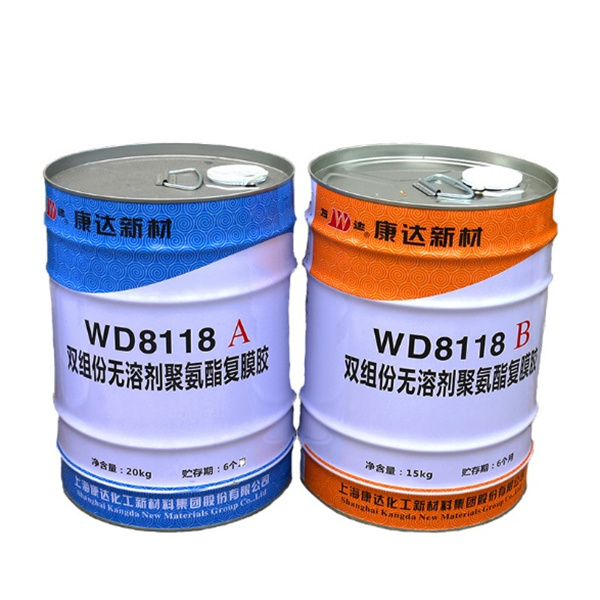
For a product-level example, see WD8118A/B Two-Component Solvent-Free Laminating Adhesive, which is described for common structures such as PET/PE, PET/CPP, OPP/CPP, PA/PE and OPP/PET/PE. The suitable aging program should still be confirmed for the specific structure and end use.
Good sample preparation is essential for meaningful comparison. Samples should represent normal production conditions and should be free from damage, wrinkles, obvious printing defects, joints, scratches and crystal-point areas.
| Sample type | Recommended preparation |
|---|---|
| Finished pouches | Randomly select representative pouches from the batch. Avoid damaged, wrinkled or visibly defective samples. |
| Semi-finished laminated film | Take samples from representative areas of the roll while avoiding joints, scratches and abnormal surface areas. |
| Test specimens | Prepare peel, heat-seal, mechanical, appearance and barrier specimens according to the selected test methods. |
Keep parallel specimens and reserve an unaged control group for comparison. Before the initial test, condition the cut specimens in a standard environment such as 23°C ± 2°C and 50% ± 5% RH for 24 hours, or follow the conditioning requirement of the applicable test method.
The same test sequence and equipment settings should be used before and after aging whenever possible. This creates a consistent baseline for calculating performance changes.
A simple performance retention calculation can be used for comparative analysis:
The following methods are practical starting points. They should be adjusted according to the packaging structure, expected environment, customer specification and applicable test standard. Do not treat one set of conditions as a universal service-life prediction.
This method is commonly used to simulate elevated-temperature warehousing or closed transportation. Example project conditions may include 60°C for 14 days for general packaging, while retort or aluminum-containing structures may require a more stringent condition defined by the project.
- Preheat the chamber and allow the internal temperature to stabilize.
- Place specimens flat with gaps between samples; avoid overlap, folding and unnecessary stress.
- Use project-defined sampling points such as the initial condition and selected intermediate and final time points.
- Condition sampled specimens before repeating the performance tests.
Humidity aging is useful for evaluating moisture-related changes in laminated films, metallized structures and pouches stored in humid environments. A project may use a general condition such as 40°C/75% RH, but the final condition must be selected according to the intended application.
- Run the chamber empty until temperature and humidity stabilize.
- Hang or place samples without stress and prevent samples from sticking to the chamber wall.
- Record condensation, surface changes and other abnormal observations during sampling.
- Wipe external moisture carefully, condition the samples and repeat the selected tests.
UVA testing can be used to assess the light stability of printed packaging and to observe appearance changes under controlled light and condensation cycles. The lamp type, irradiance, cycle, black-panel temperature and total exposure time should be recorded in the test report.
- Check the equipment condition and lamp status before testing.
- Fix printed specimens flat and wrinkle-free, with the printed side facing the light source.
- Use defined sampling points, for example 0, 200 and 500 hours, or a longer project schedule when required.
- Avoid direct eye exposure to UV radiation and condition samples before evaluation.
Xenon arc testing can be selected when outdoor light and moisture exposure are relevant. The cycle, irradiance, black-panel temperature, spray conditions and exposure duration must be specified in the test plan. It should not be treated as identical to UVA fluorescent testing.
A useful report should combine numerical data with visual evidence. A high retention rate does not automatically mean that the package passes if there is severe delamination, a sharp barrier loss or a critical seal defect.
- Compare pre-aging and post-aging data using the same test method and sample direction.
- Record the failure mode, failure location and failure time, not only the final numerical result.
- Use photographs to document delamination, blistering, ink fading, aluminum-layer changes and seal defects.
- Define acceptance criteria before testing and link them to the customer specification or applicable standard.
- Keep raw data, test conditions, sample information and photos together in the final report.
Accelerated aging results should be interpreted as comparative and project-specific evidence, not as a direct conversion into real service life.
- High temperature, humidity or UV exposure may create a different failure mechanism from normal storage.
- Different adhesive systems, inks, films, sealant layers and package contents can respond differently under the same condition.
- Final acceptance criteria should be confirmed with the customer, packaging structure and applicable test standards.
- For important applications, accelerated tests should be combined with production validation and, where necessary, real-time storage observation.
For solvent-free laminated packaging, accelerated aging can help evaluate whether the adhesive maintains peel strength, laminate integrity and barrier protection under heat and humidity. The test plan should be selected according to the laminate structure, adhesive system, end-use temperature, packaged contents and customer requirements.
Kangda’s solvent-free laminating adhesive range includes solutions for flexible packaging applications. For textile-related hot melt applications, see the PUR hot melt adhesive for textile lamination category. Product selection should be verified through sample trials and application-specific testing.
| Sample information | Batch, structure, film type, adhesive system, production date and sample source. |
| Aging conditions | Temperature, humidity, light source, irradiance, cycle, exposure time and sampling schedule. |
| Performance data | Pre-aging and post-aging appearance, peel, heat-seal, mechanical, color and barrier results. |
| Conclusion | Pass/fail or project judgment, failure description, photographs and recommended follow-up actions. |
No. It can reveal risks and support comparative evaluation, but it should not be treated as a direct conversion into real-time shelf life without appropriate validation.
At minimum, consider appearance, peel strength and heat-seal strength. For barrier packaging, also consider oxygen and water vapor transmission. Add mechanical or color testing when the application requires it.
No. The condition should be selected according to the laminate structure, adhesive, contents, expected environment, customer specification and applicable test standard.
Start with the film structure, end-use temperature, retort or boiling requirement, barrier target, processing speed and curing conditions. Then confirm the choice through sample trials and application-specific testing.
Accelerated aging testing is a practical tool for identifying potential changes in flexible packaging before large-scale production or market delivery. A reliable program should connect the packaging structure and adhesive system with the expected environment, measure both appearance and performance, and define acceptance criteria before testing begins.
When used together with sample trials, process validation and customer-specific requirements, accelerated aging data can support better adhesive selection and more stable flexible packaging production.
For product information or application support, visit the Kangda product center or contact the Kangda team to discuss your packaging structure and testing requirements.
Post time: Aug-24-2026